
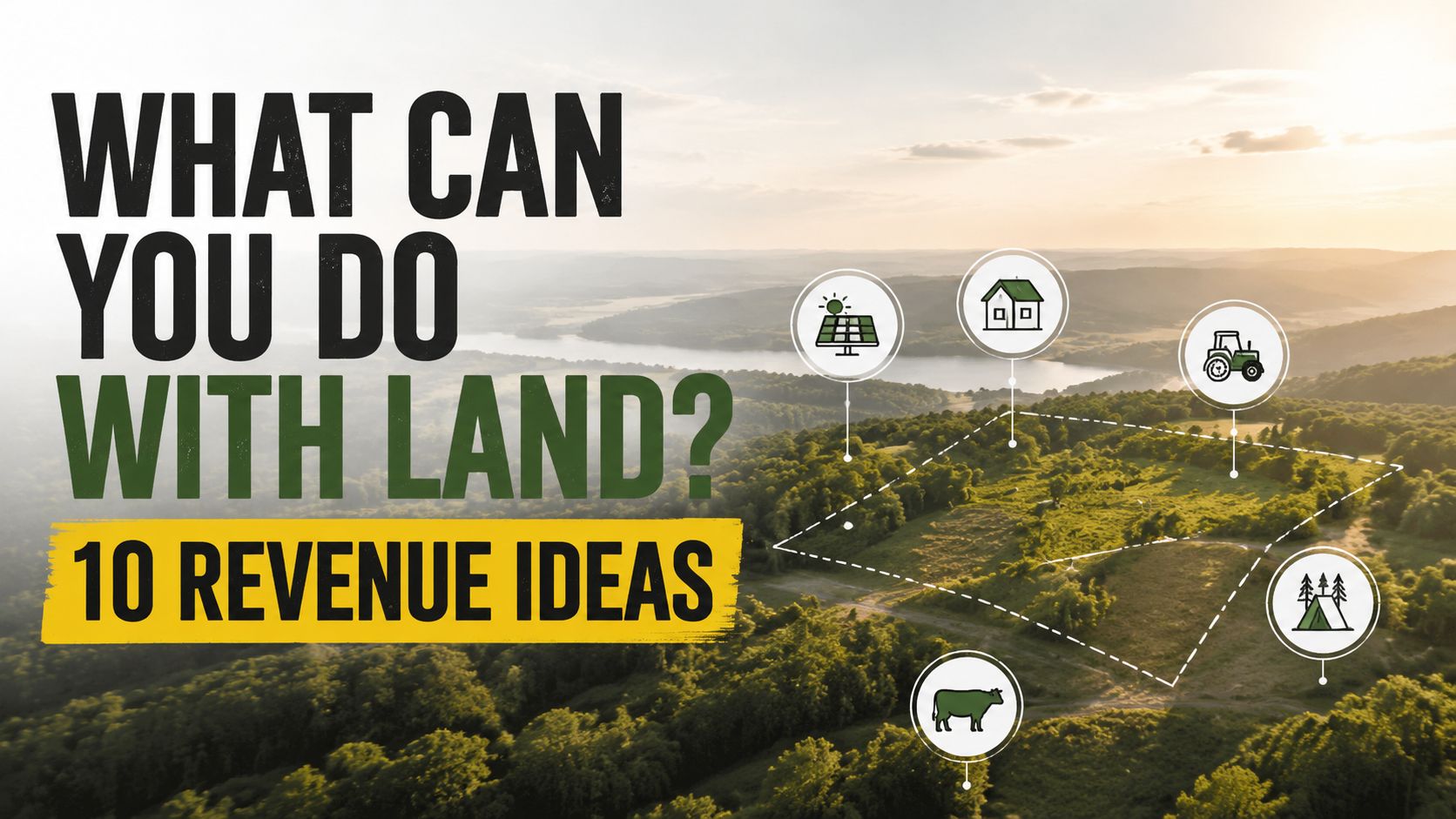
In 2023, the world had about 4.8 billion hectares of agricultural land, including roughly 1.6 billion hectares of cropland and 3.2 billion hectares of permanent meadows and pastures. Vacant land can produce income through leases, agricultural production, timber, parking, hunting, energy infrastructure, storage, lodging, recreation, and commercial development, but the best choice depends on zoning, access, utilities, demand, and development cost.
What can you do with land beyond waiting for it to appreciate? You can match the parcel to a specific type of demand, then choose between a low-infrastructure lease, an active operating business, or a capital-intensive development project.
The screening process comes first. Confirm zoning, legal access, utilities, environmental constraints, insurance requirements, permits, taxes, and startup costs before committing. A parcel that looks inexpensive can become difficult to use if it lacks road frontage, a viable septic option, water access, or permission for the intended activity. Buyer guidance from Before You Buy Land emphasizes that zoning is only one part of county-level due diligence.
LandZero may be a potential acquisition resource for buyers comparing low-cost U.S. parcels by state and budget. Its purchase features include owner financing, zero down payments, no credit checks, and zero closing costs, but those conveniences don't prove that a parcel is suitable, permitted, or profitable for your plan.
Table of Contents
- 1. Residential Homesteading and Off-Grid Living
- 2. Recreational Land and Vacation Properties
- 3. Agricultural and Farming Operations
- 4. RV Parks and Mobile Home Communities
- 5. Solar and Renewable Energy Projects
- 6. Conservation and Land Trust Projects
- 7. Campgrounds and Glamping Operations
- 8. Commercial Real Estate Development
- 9. Storage Facilities and Self-Storage Operations
- 10. Specialty and Agritourism Operations
- Top 10 Land Uses Compared
- Choose the Revenue Model Your Parcel Can Support
1. Residential Homesteading and Off-Grid Living
A rural parcel can support a primary home, cabin, garden, livestock area, and independent utility systems. Homesteading usually serves housing and lifestyle demand rather than immediate investment demand, although a well-planned property may later support lodging, farm sales, or educational visits.
The first step is to confirm that residential use is allowed. Ask the county about minimum dwelling size, accessory structures, setbacks, driveway standards, occupancy rules, manufactured or tiny homes, and whether off-grid construction follows the same building requirements as a connected home. County rules can also determine whether a well, composting toilet, solar system, or alternative wastewater design is acceptable.
Build the infrastructure plan before the house
Water, wastewater, power, and emergency access often control feasibility. Review how to bring utilities to your land before assuming that solar panels or a private well will solve every problem. A soil evaluation and septic review may be more important than the view.
A practical sequence looks like this:
- Confirm water: Determine whether a well is possible, whether a shared system exists, and what water hauling or storage would involve.
- Verify wastewater: Ask whether a perc test, septic design, or alternative system is required.
- Price access: Check whether the existing road is legally recorded, physically usable, and suitable for emergency vehicles.
- Phase improvements: Start with the minimum permitted dwelling and essential systems, then add gardens, workshops, or guest facilities.
The trade-off is clear. Off-grid land may offer privacy and lower dependence on public infrastructure, but it can demand more planning, maintenance, and technical skill. A parcel that works for a weekend cabin may not support full-time living, agricultural production, or rental guests.
2. Recreational Land and Vacation Properties
A wooded parcel near a known hunting area presents a different opportunity than desert acreage near scenic public land or waterfront property near a tourism market. The demand already present nearby should shape the plan. Recreational land can serve hunting, fishing, camping, seasonal retreats, or private outdoor use without requiring an immediate conventional residence.
Personal use is the simplest model. Income options require more work, including campsite fees, guest stays, hunting-access leases, or a seasonal retreat. Access often determines whether those models work. Visitors need a clear route, safe parking, and accurate directions. Owners also need a realistic plan for maintenance and emergency response.
Separate recreation from hospitality
Private recreation may need little infrastructure. Paid lodging can bring zoning, health, fire, and insurance requirements that do not apply to personal use. Ask the county whether short-term rentals, tent camping, cabins, RVs, or events are allowed. Confirm hunting seasons and license requirements with the relevant state authorities before advertising access.
Evaluate the parcel across four areas:
- Terrain and access: Can visitors reach it in the conditions common during the intended season?
- Water and sanitation: Are drinking water, toilets, and wastewater arrangements legally and practically available?
- Guest safety: Can you control fires, vehicles, firearms, boundaries, and overnight occupancy?
- Seasonality: Will visitors come outside the strongest recreational period?
A recreational parcel can earn income without becoming a resort, but every guest creates liability, maintenance, and customer-service obligations.
The strongest fit is often a simple, clearly permitted use. A remote property with weak access may suit the owner but perform poorly as a vacation rental. A less scenic parcel with reliable access and nearby attractions may do better as a paid campsite. Capital-intensive cabins or event facilities should follow proof of demand, not precede it. An owner-financed parcel from LandZero may help at the acquisition stage, but permits, site work, insurance, and ongoing operations still determine whether the revenue model works.
3. Agricultural and Farming Operations
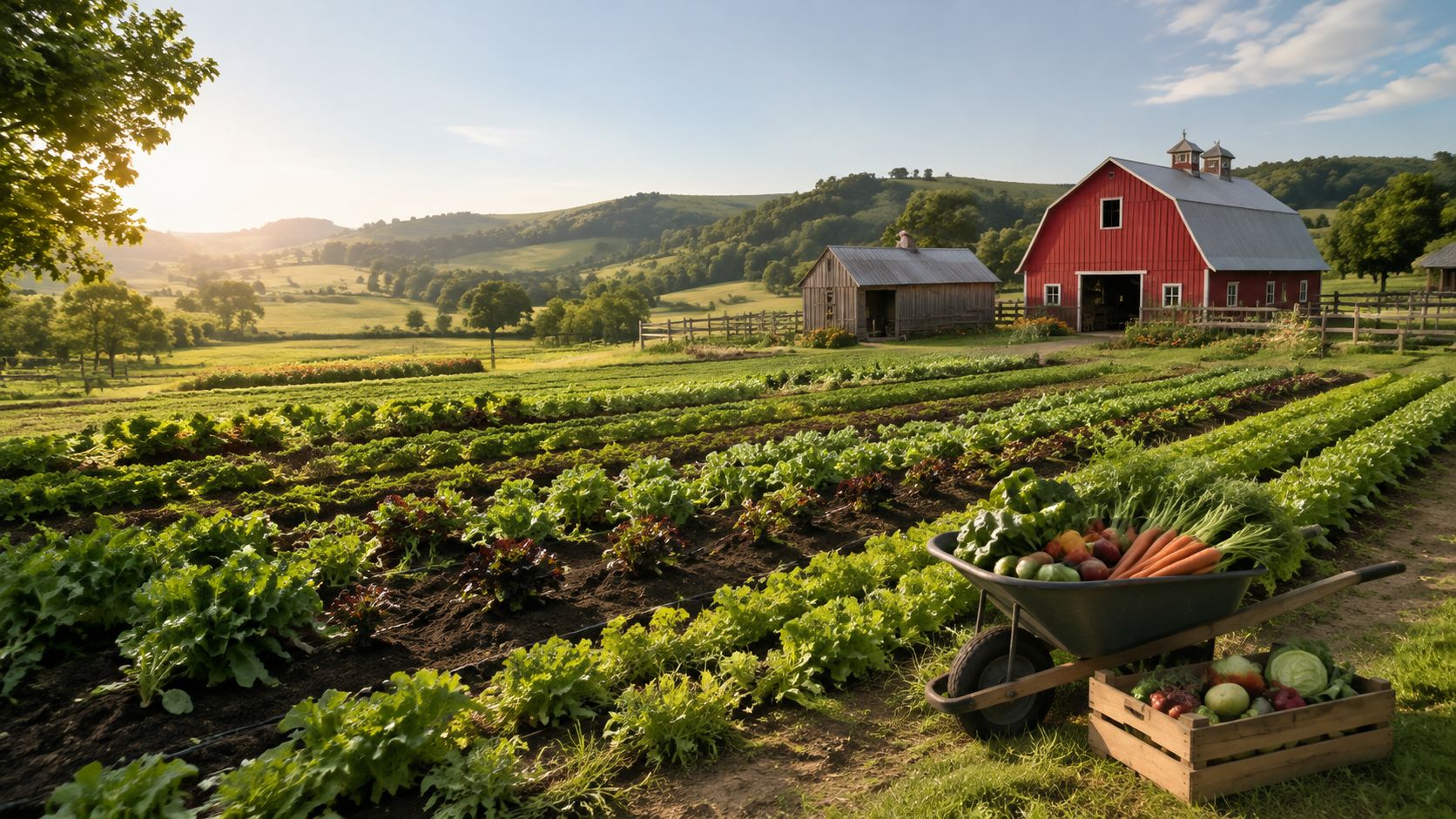
Soil, water, climate, topography, labor, equipment, and market access determine whether agriculture is practical on a parcel. The FAO's land statistics illustrate agriculture's broad role. In 2023, temporary crops such as wheat, rice, and maize covered about 1.08 billion hectares globally, while permanent crops including cocoa, oil palm, and coffee covered nearly 200 million hectares.
That scale does not make every parcel suitable for farming. A small property may support vegetables, nursery plants, eggs, or direct sales, yet perform poorly as a commodity-crop site because machinery, volume, and buyer access matter.
Match the operation to the land
Assess drainage, erosion risk, growing conditions, fencing, water availability, and the routes needed to move supplies and products. Then choose an operating structure: farm the property yourself, lease it to a qualified farmer, or arrange contract production.
Revenue can come from several sources:
- Commodity sales: Crops, hay, livestock, or timber sold through established buyers.
- Direct-to-consumer sales: Farm stands, subscriptions, restaurants, or farmers markets.
- Specialty production: Higher-value crops suited to local climate and customer demand.
- Agricultural leasing: A lower-involvement option when a capable operator needs access.
The main trade-off is control versus operating exposure. Direct farming may create more ways to earn revenue, but it also requires production knowledge, equipment, compliance, labor, and dependable buyers. Leasing reduces daily involvement, while rent remains tied to the parcel's productivity and local farm economics.
An owner-financed LandZero parcel may help with acquisition, but it does not solve soil improvements, irrigation, fencing, equipment, permits, or market access. Test the operating model before committing capital.
4. RV Parks and Mobile Home Communities
RV parks and mobile home communities serve two distinct demands: seasonal stays and longer-term housing. Revenue usually comes from recurring space rent, with utilities charged separately or bundled. The trade-off is infrastructure. Each approved space may require an access road, pad, water, wastewater, electricity, drainage, fire protection, trash service, and ongoing management.
Zoning controls the project before construction begins. Counties may classify long-term RV occupancy, seasonal camping, manufactured housing, and short-term stays separately. Rules can also set density, space dimensions, parking, common areas, setbacks, and utility standards. Request written confirmation of the permitted use before buying the parcel.
Underwrite every space
Evaluate the property by usable spaces, not acreage alone. Price utility extensions, internal roads, pads, stormwater work, shared facilities, permits, and tenant connections. Compare those costs with local rents and realistic occupancy, then test whether the project still works if approvals take longer or fewer spaces open initially.
A workable operation needs:
- Clear leases: Cover rent, utilities, maintenance, vehicles, guests, pets, and termination rights.
- Reliable management: Budget for resident communication, rule enforcement, repairs, and clean common areas.
- Utility controls: Choose separate metering, shared billing, or a bundled charge.
- Demand validation: Speak with local employers, housing providers, RV dealers, and property managers.
Highway access and nearby employment can support demand, while an isolated tract may struggle even if it offers more acreage. An owner-financed LandZero parcel may help with acquisition, but it does not fund roads, utility connections, permits, or site preparation. This capital-intensive model suits buyers who can confirm zoning, secure infrastructure, and manage residents, not owners seeking passive land income.
5. Solar and Renewable Energy Projects
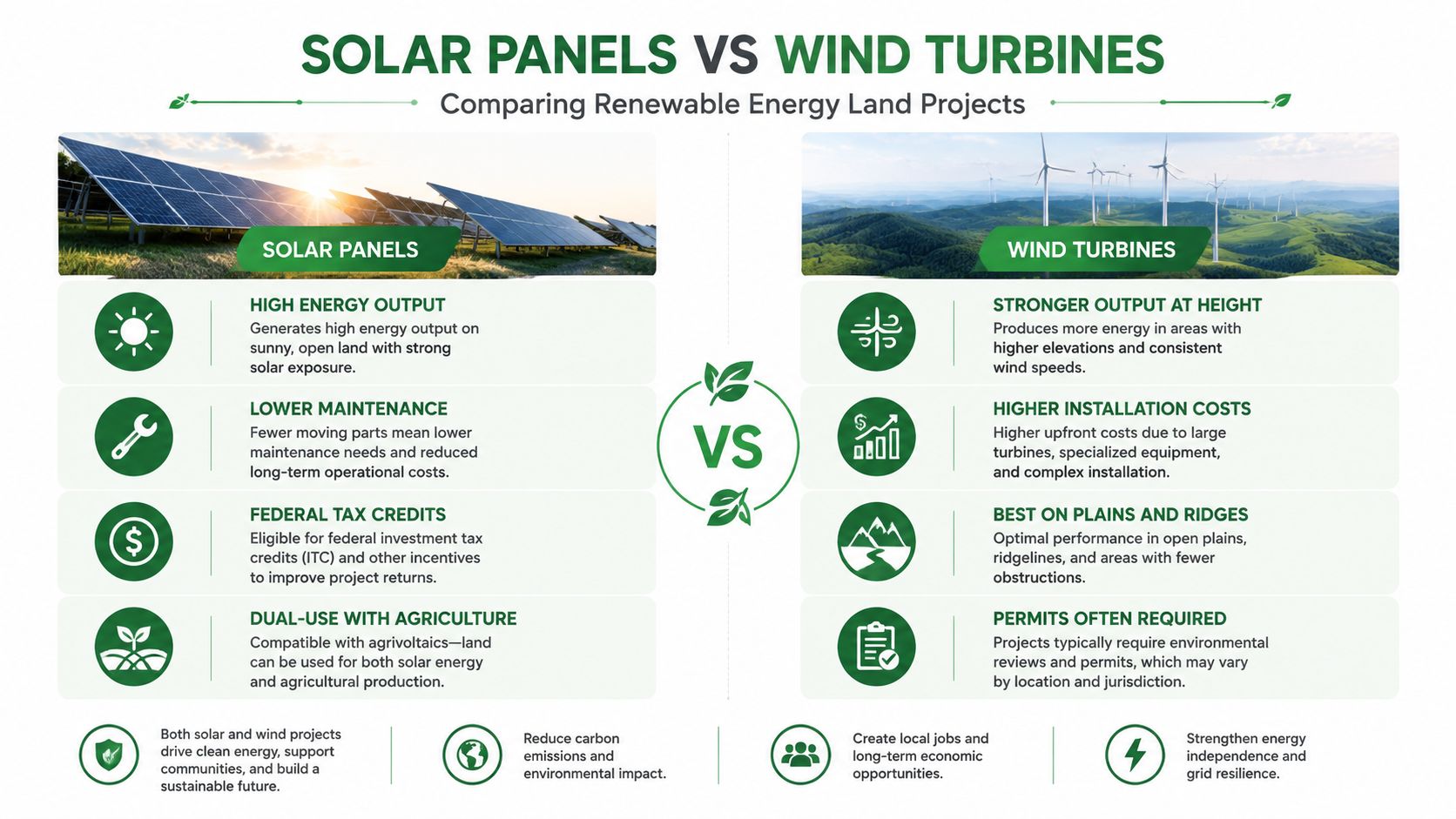
Renewable energy serves electricity demand by using land for solar arrays, wind turbines, battery systems, substations, or transmission infrastructure. Landowners can earn through a ground lease, easement, or development agreement without operating the facility. The developer generally handles technical studies, permitting, interconnection, construction, and long-term maintenance, while the owner accepts restrictions on future land use.
Open space alone does not make a parcel suitable. Solar exposure, wind conditions, slope, drainage, grid proximity, transmission capacity, setbacks, environmental constraints, and local rules all affect feasibility. Developers may also require a large, connected tract and a practical access route.
Check the site before signing
Early discussions usually involve screening and may remain nonbinding. Review the proposed term, exclusivity, extension rights, access, decommissioning, restoration, insurance, and payment structure before granting site control. A lengthy option period can prevent other uses even if construction never begins.
A practical review sequence is:
- Confirm zoning and the parcel's utility context.
- Locate nearby substations and transmission infrastructure.
- Ask experienced developers whether the site fits their screening criteria.
- Have an attorney review any option, easement, or lease.
- Compare the expected return with agricultural, recreational, or conservation uses.
A LandZero owner-financed parcel may help with acquisition, but it does not pay for studies, interconnection, permitting, construction, or restoration. Energy leasing can provide limited day-to-day involvement after construction, yet approvals and grid access can delay or prevent revenue. It fits owners who can tolerate a long development process and restrictive agreements.
6. Conservation and Land Trust Projects
Conservation is a revenue path when the owner values habitat protection, agricultural preservation, legacy planning, or tax treatment alongside financial return. Tools can include conservation easements, land donations, bargain sales, habitat agreements, or partnerships with qualified land trusts. The land may remain privately owned, continue in agricultural use, or transfer to a conservation organization under an agreed structure.
A conservation easement can restrict development permanently. That restriction may protect wetlands, wildlife habitat, open space, scenic features, or farmland, but it can also reduce future flexibility. Owners should understand precisely which activities remain allowed, including farming, hunting, fencing, trails, structures, and later transfers.
Get independent advice on value and tax treatment
Tax deductions and other benefits depend on the facts, documentation, legal structure, valuation, and applicable rules. Don't estimate a benefit from a general internet description. Speak with a qualified tax professional, attorney, and established conservation organization before signing.
The Iowa Natural Heritage Foundation's land options guide illustrates why land protection decisions often combine personal goals, income needs, stewardship, and succession planning. Its examples also show that landowners may consider more than a simple donation or sale.
This model works best when conservation is a genuine objective. It isn't a substitute for development if the owner's primary goal is maximum build-out value. Before buying, review title, mineral rights, existing restrictions, habitat features, and the likely willingness of a qualified organization to participate.
7. Campgrounds and Glamping Operations
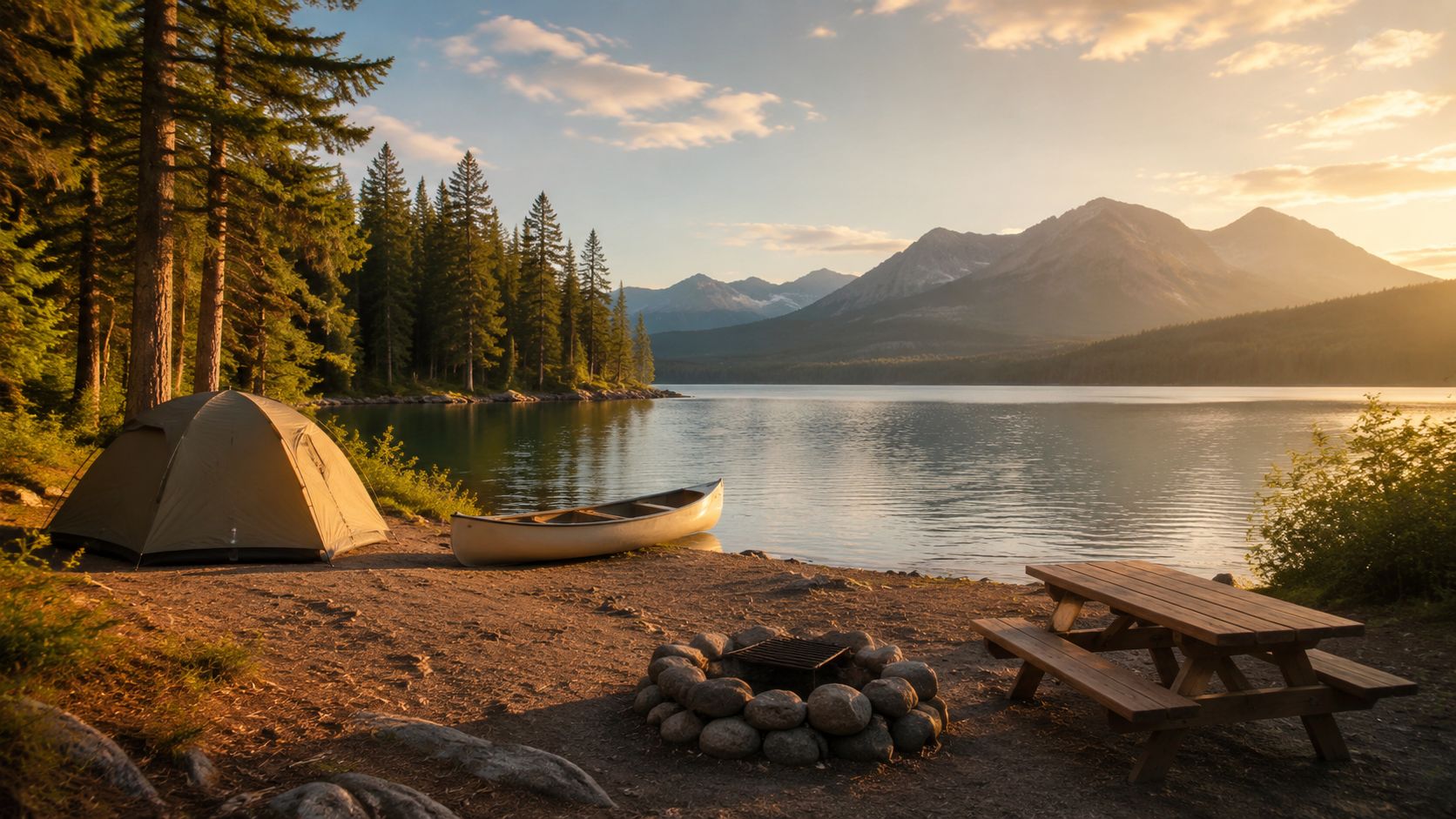
Campgrounds and glamping sites serve tourism demand through nightly stays, seasonal bookings, group retreats, workshops, and outdoor experiences. Compared with permanent lodging, a basic campground may require less construction, but guests still need safe access, sanitation, waste handling, fire controls, privacy, and dependable communication.
The right operating model depends on the setting. A desert parcel may attract visitors seeking stargazing and quiet, while mountain land may support hiking or seasonal retreats. A lakeside property can appeal to water-based recreation, but shoreline restrictions, flood risk, erosion, and public-access rules may limit the usable area.
Start with a permitted minimum viable site
Before buying, ask the county about transient occupancy, campground density, restrooms, wastewater, fire safety, signage, food service, and event rules. Don't assume that placing a yurt, tent platform, or tiny cabin avoids lodging regulations.
A lean launch may include:
- A small number of sites: Prove demand before expanding the footprint.
- Durable guest facilities: Prioritize toilets, waste systems, paths, lighting, and fire safety.
- A clear booking process: Use accurate photos, access directions, cancellation terms, and occupancy rules.
- A distinct experience: Offer privacy, scenery, guided activities, workshops, or a strong local connection.
The campsite-building guide from LandZero can help buyers think through a basic site, but its existence doesn't establish that any particular parcel can legally host guests or operate at the stated cost. Construction conditions vary sharply by county and terrain.
8. Commercial Real Estate Development
Commercial development serves business demand through retail, offices, warehouses, workshops, contractor yards, and light industrial facilities. Revenue generally comes from tenant leases, but the owner must first create a site that businesses can legally and practically use.
Location drives this strategy. Road frontage, visibility, traffic patterns, customer access, loading areas, parking, utility capacity, and proximity to workers or suppliers can matter more than the parcel's raw size. The USDA Economic Research Service overview of major U.S. land uses describes land as a multi-use national resource spanning agriculture, forests, urban areas, special uses, and other categories. Commercial development is one of the more infrastructure-heavy ways to shift land into an economic use.
Validate tenants before designing the project
Start with a local demand conversation. Contact commercial brokers, contractors, manufacturers, logistics operators, and municipal economic-development staff. Find out which businesses are looking for space, what building and parking requirements they face, and whether current vacancies already meet demand.
Then review the development path:
- Zoning and entitlements: Confirm the use, density, signage, parking, setbacks, and approval process.
- Site access: Verify frontage, curb cuts, easements, road capacity, and delivery access.
- Utilities: Confirm capacity, connection distance, and upgrade responsibility.
- Construction economics: Review what it costs to develop raw land in 2026 as a planning reference, then obtain local estimates.
Commercial projects can create durable lease income, but they usually require substantial capital and professional management. Buying land first and searching for a tenant later creates avoidable risk.
9. Storage Facilities and Self-Storage Operations
Storage serves households, small businesses, contractors, boat owners, and RV owners who need secure space without occupying a larger building or property. The owner can develop enclosed units, outdoor parking, vehicle storage, or climate-controlled facilities, depending on zoning, climate, security needs, and local demand.
Self-storage looks passive after construction, but the site still needs management systems. Customers expect accessible gates, clean grounds, dependable payment processing, lighting, cameras, maintenance, and clear rules. Outdoor storage may require less construction than enclosed units, yet drainage, surfacing, fencing, screening, and fire access still affect feasibility.
Underwrite the site by customer type
A parcel near growing housing, apartment turnover, small-business activity, or recreational destinations may support different storage products. Research nearby facilities, their unit mix, availability, access hours, security features, and customer complaints. Don't build a large facility just because the land is cheap.
The Yardi Matrix vacant-land database reports coverage of 13,668,188 vacant land parcels across U.S. markets, with filters including zoning classification, lot size, tax valuation, and price. That parcel-level market infrastructure can support early screening, but it doesn't replace county confirmation or a site-specific feasibility study.
A sensible process is to confirm zoning, map usable acreage, estimate road and utility work, select the unit mix, and compare projected operating costs with local rents. Storage can produce recurring revenue with limited staffing, but oversupply, poor access, weak security, and expensive site work can undermine the model.
10. Specialty and Agritourism Operations
Agritourism combines production with visitor revenue. Pumpkin patches, corn mazes, u-pick farms, vineyards, farm stores, educational visits, petting areas, and seasonal events can produce income from admission, products, food, merchandise, classes, and private bookings.
This model depends on customer experience as much as agricultural output. Visitors need safe parking, restrooms, walking routes, shade or shelter, signage, payment systems, and clear boundaries. The crop or activity must also align with the local climate and the season when customers are willing to travel.
Design for more than one revenue stream
A farm that relies on admission alone may struggle when weather changes or attendance falls. Consider pairing the primary attraction with produce sales, workshops, photography sessions, school visits, farm products, or private events, provided the county permits those activities.
Use a practical sequence:
- Choose the anchor attraction: Select a crop, crop view, or activity with local recognition and reliable growing conditions.
- Plan visitor circulation: Separate pedestrians, tractors, deliveries, parking, and emergency access.
- Confirm approvals: Review agricultural exemptions, event permits, food rules, traffic requirements, and signage restrictions.
- Build demand early: Work with tourism organizations, schools, local businesses, and online booking channels.
- Protect the farm operation: Keep visitors away from unsafe machinery, livestock areas, chemicals, and active work zones.
Agritourism can outperform a simple farm lease when the owner has strong marketing and an accessible location. It also creates concentrated seasonal labor, weather exposure, liability concerns, and customer-service demands. The parcel must support both the agricultural activity and the visitor infrastructure.
Top 10 Land Uses Compared
| Use Case | 🔄 Implementation Complexity | ⚡ Resource Requirements | 📊 Expected Outcomes | ⭐ Key Advantages | 💡 Brief Tips |
|---|---|---|---|---|---|
| Residential Homesteading & Off-Grid Living | High, build wells, septic, solar/wind; permits & technical skills required | High capital & time: infrastructure, tools, ongoing maintenance | Self-sufficiency, lower long-term utility costs, lifestyle change | ⭐ Privacy, sustainability, long-term cost savings | 💡 Check zoning, test water/soil, budget 30–50% of land cost for infra |
| Recreational Land & Vacation Properties | Low–Medium, minimal initial development for seasonal use | Moderate: access, basic campsite or cabin setup, travel logistics | Weekend retreats, seasonal rentals, occasional income | ⭐ Lower development costs; flexible seasonal use | 💡 Verify hunting/fishing regs, assess water access, review rental zoning |
| Agricultural & Farming Operations | High, soil/water management, equipment, ongoing operations | High: equipment, water rights, labor, storage & distribution | Commodity or direct-to-consumer income; scalable farming business | ⭐ Subsidies, repeatable revenue, land appreciation potential | 💡 Conduct soil tests, start small, pursue USDA grants and CSA channels |
| RV Parks & Mobile Home Communities | High, utility hookups, roads, permits, management systems | High: utilities, common facilities, staffing, licensing | Recurring monthly rental income; stable cash flow when leased | ⭐ Consistent income; strong demand for affordable housing | 💡 Confirm local zoning, calculate per-space utility costs, create clear leases |
| Solar & Renewable Energy Projects | Medium–High, site assessment, permitting, specialized installation | Very high capital: panels/turbines, inverters, grid interconnection | Long-term energy revenue, tax credits, possible PPAs | ⭐ Predictable long-term contracts; environmental benefits; dual land use | 💡 Assess irradiance/wind, secure PPAs, factor 25–30 year maintenance |
| Conservation & Land Trust Projects | Medium, legal easements and long-term stewardship requirements | Low–Moderate: legal fees, monitoring, stewardship coordination | Tax deductions, possible carbon credit income, preserved habitat | ⭐ Significant tax benefits and community goodwill | 💡 Consult tax pros, partner with established trusts, document conservation value |
| Campgrounds & Glamping Operations | Medium, site layout, utilities for baths/showers, guest services | Moderate: glamping structures, bathhouses, booking systems, staffing | Tourism income, premium nightly rates, seasonal peak earnings | ⭐ High demand in scenic areas; scalable price tiers | 💡 Research peak seasons, invest in quality glamping units, prioritize online bookings |
| Commercial Real Estate Development | High, construction, tenant improvements, regulatory compliance | Very high: construction costs, infrastructure, specialized management | Long-term stable lease income with professional tenants | ⭐ Predictable cash flow, depreciation and tax benefits | 💡 Perform market analysis, secure road frontage, use professional property managers |
| Storage Facilities & Self-Storage Operations | Medium, simpler construction but requires security and access systems | High: building units, security, climate control (if premium) | High-margin recurring rental revenue; relatively passive post-build | ⭐ Durable asset with steady demand and low labor needs | 💡 Analyze local demand, offer mixed unit sizes, invest in security and online reservations |
| Specialty & Agritourism Operations | Medium, combines farming with visitor infrastructure and events | Moderate: seasonal crops, visitor facilities, staffing, marketing | Diversified seasonal income (admissions, F&B, events) | ⭐ Multiple revenue streams and strong community engagement | 💡 Pick climate-suitable attractions, plan parking/restrooms, market for Instagram/retention |
Choose the Revenue Model Your Parcel Can Support
The best land strategy starts with the parcel, not the trend. Classify the property by zoning, road access, topography, surrounding uses, and legal restrictions. A remote tract may suit hunting, conservation, grazing, or a private retreat. Land near housing, highways, employment, or tourism may support storage, RV spaces, commercial uses, or lodging, but only if local approvals and infrastructure support the plan.
Confirm utilities and environmental constraints before you calculate returns. Ask the county about zoning, setbacks, overlays, special districts, floodplain rules, building codes, access, camping, events, agricultural uses, and wastewater. The land-buyer questions from Before You Buy Land are useful because they address the local details that generic land articles often miss. Zoning permission alone doesn't prove that a parcel is buildable.
Then separate low-infrastructure strategies from development projects. Leasing land for agriculture, grazing, hunting, or certain recreational uses may require less capital than building a campground, storage facility, manufactured-home community, energy project, or commercial property. That doesn't make leasing automatically better. Lease income may be simpler and more predictable, while development can create greater control and more revenue sources at the cost of approvals, construction, financing, insurance, and management.
Utility and wastewater feasibility deserve their own line in the budget. The AgCredit land-buying guide highlights questions about existing utilities, hookup costs, perc tests, septic records, and soil evaluations. A cheap parcel can become an expensive project if water, septic, power, or road improvements are difficult or impossible.
Validate local demand before purchase. Speak with county offices, contractors, septic professionals, surveyors, insurers, tax professionals, agricultural extension staff, commercial brokers, storage operators, campground managers, or renewable-energy developers, depending on the intended use. Ask each professional for site-specific costs and constraints, not broad estimates copied from another market.
Financing can help with acquisition, but it can't solve a feasibility problem. Note Investor reports 89,890 owner-financed transactions in 2024, $30.3 billion in seller-financed notes created, and an average LTV of 69% for land notes in that market, which shows that seller financing is an established acquisition channel. Those figures don't guarantee that financing terms will make a particular project affordable or profitable.
LandZero offers vacant U.S. parcels organized by state and budget, along with owner financing through LandZero FlexPay. Buyers can browse listings and budget collections, but financing convenience doesn't replace title review, zoning confirmation, utility research, insurance planning, or proof that the proposed use has enough local demand.
Start by writing a one-page land-use plan. Name the customer, permitted use, access route, utility solution, first improvement, operating workload, revenue source, and biggest risk. If the plan still works after you price the difficult parts, the parcel may deserve closer review. If it depends on an unconfirmed zoning interpretation, an assumed septic system, or a tenant who hasn't been identified, keep looking.
LandZero offers vacant land listings across multiple U.S. states, budget-based collections, and owner financing through LandZero FlexPay, with online purchasing features that include zero-down initiation, no credit checks, and zero closing costs. Visit LandZero to compare parcels for homesteading, recreation, agriculture, storage, lodging, or future development, then complete your own county-level due diligence before buying.