
Arizona's land market is shaped by something most buyers miss at first glance. Federal agencies, tribal governments, and the state control about 81.8% of Arizona's land area, leaving roughly 18.1% in private hands, so the pool of privately conveyable parcels is structurally limited compared with many states (Arizona fact check). That scarcity changes how people buy land in Arizona. The best parcel depends on the use case, urban access, agriculture, recreation, retirement, off-grid independence, or extreme affordability, and each choice brings a different mix of water, access, zoning, utilities, and financing risk.
The regional examples below are opportunities, not verified current listings, and that distinction matters. A parcel that works for a small homestead near a metro edge may be a poor fit for a retirement cabin in the mountains or an RV-friendly lot in the northwest. The comparison here stays practical, location, intended use, infrastructure, and what you need to verify before wiring money.
LandZero fits naturally into that discovery process because it organizes vacant-land browsing by state and budget, so buyers can narrow Arizona options without starting from scratch. Its program features include zero-down owner-financing initiation, no credit checks, and zero closing costs on financed purchases, but parcel terms still need to be reviewed one by one. If you're sorting through cheap land for sale in Arizona, that combination can help you compare parcels faster while still doing the hard checks on access, water, zoning, and carrying costs.
Table of Contents
- 1. Phoenix Metropolitan Area, Urban Fringe and Suburban Development Land
- 2. Tucson Region, Desert Agriculture and Recreational Land
- 3. Northern Arizona Plateau, Mountain Communities and Scenic Properties
- 4. Yuma County, Agricultural Hub and Border Region Opportunities
- 5. Southern Arizona Desert, Off-Grid and Minimal-Infrastructure Living
- 6. White Mountains Region, Recreational and Retirement Land
- 7. Apache Junction and East Valley, Affordable Desert Living with Growth Potential
- 8. Cochise County, Historic Mining Heritage and Rural Properties
- 9. Peoria and Sun City Area, Active Adult and Retirement Communities
- 10. Kingman and Northwest Arizona, Remote Land and RV-Friendly Properties
- 10-Region Arizona Land Comparison
- Turn Regional Research Into a Safer Purchase
1. Phoenix Metropolitan Area, Urban Fringe and Suburban Development Land
The Phoenix metro fringe is where many buyers start because it gives them the best shot at balancing access and future upside. Parcels near Queen Creek, Surprise, Goodyear, Gilbert, and Chandler often appeal to homestead buyers and small-acreage investors who want to stay close to jobs, services, and paved roads. The trade-off is simple, better convenience usually means tighter rules, more competition, and a higher need to verify how the surrounding area is changing.
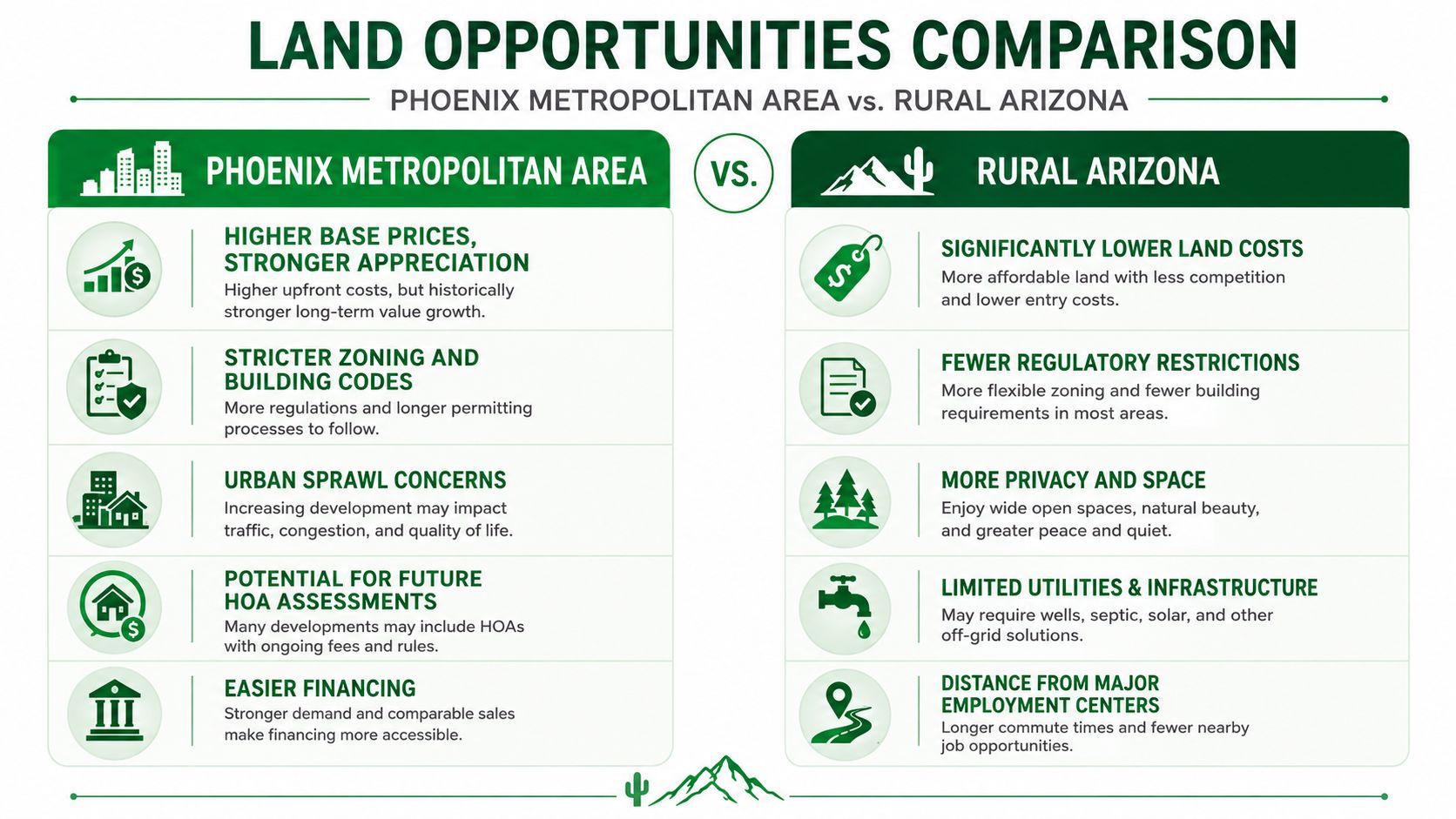
Practical rule: If a parcel sits near an expanding edge, assume the land's long-term value depends as much on nearby approvals and road access as it does on the lot itself.
The first check is zoning. Before you evaluate price or aesthetics, read the local use rules and confirm whether the parcel can support your actual plan, whether that's a residence, small farm use, or a future hold. LandZero's zoning guide is useful here because many buyers underestimate how much zoning shapes what a cheap parcel can become.
A second layer is drainage and nearby development. Raw fringe land can look open and clean, but a new subdivision, retention basin, or road project can alter access, runoff, and quiet enjoyment. If you want land in Arizona near Phoenix, treat future city expansion as part of the purchase thesis, not as an afterthought. Verify water availability, local flood conditions, and whether the parcel's access road is private, shared, or dependent on future improvements.
2. Tucson Region, Desert Agriculture and Recreational Land
Tucson and the surrounding county areas often make more sense for buyers who want elbow room without fully giving up city proximity. The region's desert-agriculture character suits hobby farms, equestrian use, and recreational properties, especially when the buyer values open land and a slower pace more than immediate suburban convenience. The market also tends to attract people who know they'll need to build around water and soil constraints instead of assuming them away.
A recent Tucson land report showed 726 active lots in May 2025, 14.8 months of inventory, 49 closings, and a median sold lot price of $110,857, which was down 11% year over year (Tucson land report). That combination points to slower turnover and more selection than a fast seller's market, which is useful for buyers who want room to negotiate and enough time to underwrite the parcel carefully.
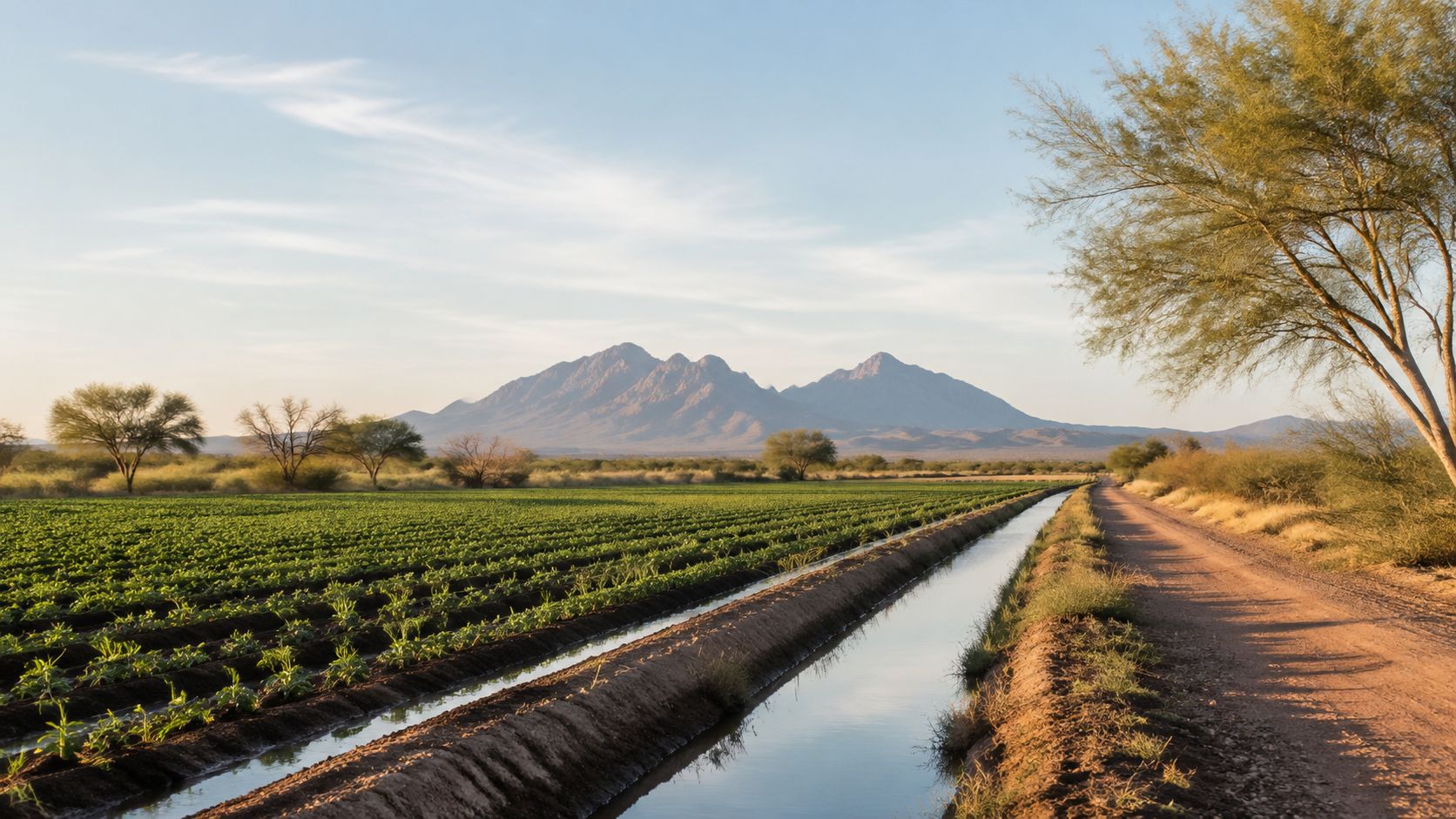
What to verify before you buy
- Water depth and reliability: Ask what the well depth is on nearby parcels and whether year-round supply is realistic for your intended use.
- Agricultural status: Confirm whether the parcel can qualify for agricultural use, lease treatment, or a tax classification that matches your plan.
- Easements and restrictions: Look for conservation easements, access limitations, and any rules that would block fencing, barns, or outbuildings.
- Local crop fit: Use county and extension resources to match crop choices to the actual soil and climate conditions.
For a buyer considering land in Arizona around Tucson, the winning move is usually conservative. A parcel can look affordable and still be expensive once you account for water, grading, fencing, and long-term maintenance. The best deals in this region are the ones that survive a water-first review.
3. Northern Arizona Plateau, Mountain Communities and Scenic Properties
Northern Arizona changes the whole buying conversation because climate becomes part of the product. Around Flagstaff, Prescott, and Payson, buyers usually trade desert heat for cooler conditions, forest access, and a property profile that feels closer to a mountain retreat than a raw desert tract. That's why this area pulls in second-home buyers, retirees, and people who want a more seasonal, recreation-heavy lifestyle.
The historical land picture helps explain why these mountain parcels are still tightly held. A University of Arizona source shows that by 1945 Arizona's land mix had already shifted heavily toward public ownership, and by 1977 federal land had risen to more than 71%, Indian reservations were nearly 27%, and private land was about 16% (University of Arizona land history source). In practical terms, mountain properties often sit inside a terrain where large public holdings shape access, defensibility, and what you can build nearby.
A useful check here is not just the parcel, but the route to the parcel. Winter roads, snow exposure, wind, and fire mitigation all matter more than they do in lower-elevation markets. If the road gets unreliable in bad weather, the property may be a better weekend retreat than a full-time residence.
LandZero's survey guide is relevant for mountain buyers because boundary clarity matters when terrain is uneven and access is less obvious. A parcel with trees and views can still hide a survey problem, a setback issue, or a misplaced improvement.
Practical insight: Scenic land sells on emotion, but it should be purchased on access, defensibility, and utility feasibility.
For buyers shopping land in Arizona in the high country, the winning parcel is the one that handles snow, fire, and seasonal access without turning into a maintenance burden. That's especially true if the goal is retirement or a cabin rather than speculative holding.
4. Yuma County, Agricultural Hub and Border Region Opportunities
Yuma County is where serious agricultural buyers look when they want infrastructure that already supports production. The region has the kind of farming context that makes crop planning, irrigation, and logistics part of the purchase, not add-ons after closing. For people who understand farm operations, that can be an advantage because the land is often judged on function rather than curb appeal.
The key advantage here is established agricultural logic. If you're looking at lettuce, citrus, or winter vegetable production, the question is not whether the land can be productive in theory, but whether the parcel has the water rights, delivery systems, and maintenance profile to support the crop you want. Buyers who skip those checks often end up buying a field that works on paper but not in the operating season.
Start with the legal side of water and then move to the physical side of irrigation. County records should tell you whether the rights are intact, what gets transferred with the parcel, and whether any conditions limit use. After that, inspect pumps, canals, lines, valves, and any upgrades the system needs before it can support your intended acreage.
Agricultural land also benefits from market realism. If you're buying to produce, your crop plan needs to make sense alongside local buyers, transportation, and input costs. That's why a conversation with a local extension office or farm advisor is more useful than a generic land brochure.
Yuma works best for buyers who already think like operators. If your goal is to own land in Arizona that can support farming rather than look agricultural, this county deserves attention. If you're not ready to verify water, systems, and market fit, it's better to keep looking.
5. Southern Arizona Desert, Off-Grid and Minimal-Infrastructure Living
Some buyers don't want convenience. They want independence, privacy, and enough acreage to build a life on their own terms. Southern Arizona desert parcels, especially farther from Phoenix and Tucson, are where that mindset often fits best. These are the places that draw homesteaders, self-sufficient builders, and people planning around solar, tanks, and long lead times instead of municipal hookups.
Practical rule: If a parcel is cheap because it has no utilities, assume the real budget starts after the purchase price.
That mindset is critical because the infrastructure gap can be larger than first-time buyers expect. Before buying, plan the entire off-grid stack, solar, battery backup, water storage, septic feasibility, and road access, not just the land itself. LandZero's off-grid guide is a good starting point because off-grid mistakes usually come from underestimating the system, not the acreage.
Water is the biggest unknown. Verify the water table, nearby well performance, and quality through county and local records rather than assuming a well will be straightforward. If road access depends on an informal path, get the easement or access agreement clarified before you commit, because the most isolated parcels can also be the hardest to service.
This is also where lifestyle buyers should be honest about daily logistics. Propane deliveries, water hauling, and battery maintenance sound manageable until they become routine. If you're buying land in Arizona for off-grid living, choose a parcel that matches your actual tolerance for isolation, not your idealized version of it.
6. White Mountains Region, Recreational and Retirement Land
The White Mountains bring a different kind of value proposition. Around Pinetop-Lakeside, Show Low, and Greer, buyers find forested settings, cooler air, lake access, and communities that already understand cabins, retirement homes, and vacation use. That makes the region attractive to people who want scenery and serviceability at the same time.
A big part of the appeal is that you're not buying just land, you're buying into a recreational rhythm. Vacation investors care about rental rules and seasonal demand, while retirees care about accessibility, road conditions, and utility reliability. Both groups need to read HOA covenants carefully, because mountain communities can have more rules than buyers expect.
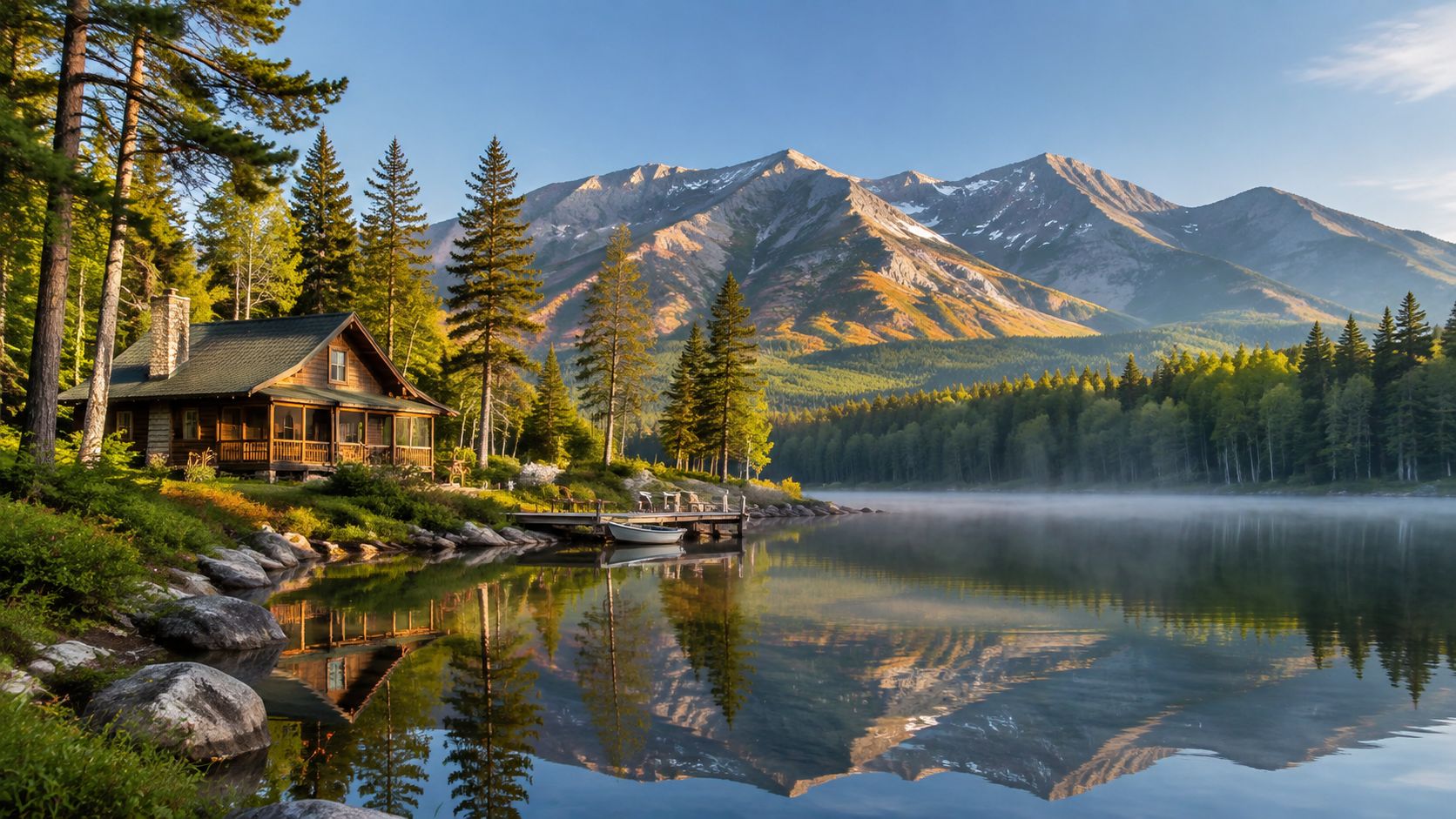
The best verification steps are straightforward. Confirm winter maintenance expectations in writing if possible, check whether roads stay serviceable during storms, and review local rental restrictions before assuming a cabin can become income-producing. Utility availability also matters more here than many buyers think, because mountain parcels can look developed from afar and still require expensive hookups.
For retirees, this region often works when the property balances quiet with practical access to services. For vacation buyers, it works when the parcel supports a realistic management plan. In both cases, land in Arizona in the White Mountains is less about raw cheapness and more about owning a place that fits regular use without constant troubleshooting.
7. Apache Junction and East Valley, Affordable Desert Living with Growth Potential
Apache Junction and the broader East Valley edge appeal to buyers who want to stay close to the Phoenix orbit without paying for the most obvious fringe markets. Affordable desert land can still feel connected, especially for people watching eastward growth patterns and thinking in multi-year horizons. The appeal isn't just price, it's the possibility that the land sits in the path of future demand.
That said, future potential only matters if the parcel is usable now. Verify zoning, water options, and future land-use designations before you count on appreciation. Buyers sometimes assume that being “close to growth” is enough, but the wrong parcel can be trapped by poor access, incompatible zoning, or utility gaps that suppress its practical value.
A good approach here is to separate lifestyle value from investment value. If you'd be happy using the parcel as a hobby-farm site or a quiet hold even if development takes time, the risk is easier to justify. If the only reason to buy is a hope that the metro area keeps expanding, the margin for error gets thin fast.
This market can make sense for buyers who want a reasonable commute and a more open feel than inner suburbs provide. It's also a good place to check how financing affects your options, because a lower-priced parcel with clean access and realistic utility plans is often a better deal than a speculative lot with a nicer story. For land in Arizona near the East Valley, disciplined due diligence matters more than optimism.
8. Cochise County, Historic Mining Heritage and Rural Properties
Cochise County has a very different identity from the central valley. The area blends rural ranch character, mining history, and small-town culture in a way that appeals to buyers who want land with some personality. Willcox, Bisbee, and Tombstone each pull a different type of buyer, from ranch-minded owners to artists and remote workers who want a place with a recognizable local character.
That diversity is useful, but it also means you need to be clear about the property's actual operating needs. A ranch parcel has different expectations from an artist live-work site, and a remote residence has different infrastructure needs from a small business property. The wrong assumption is usually that “rural” automatically means flexible. It doesn't.
Water verification matters early here, along with road access and maintenance responsibility. If the parcel needs a well, get as much local evidence as you can about drilling feasibility and nearby performance. If the road is private or lightly maintained, understand who pays when conditions worsen.
Good rural land is the kind you can explain in one sentence and still defend after you've checked access, water, and use rules.
Cochise also rewards buyers who plug into the local community instead of trying to operate in a vacuum. Ranchers, artists, and small operators often know which properties cause headaches and which ones behave well over time. If you're looking for land in Arizona with character and a workable rural setup, this county can be a strong fit, as long as you're realistic about the distance and the support network.
9. Peoria and Sun City Area, Active Adult and Retirement Communities
The northwest Phoenix valley is a different kind of retirement play. Peoria and Sun City attract buyers who want established services, community amenities, and a lifestyle built around active adult living rather than raw land freedom. Some buyers want to develop a retirement home inside or near those systems, while others want independent parcels with access to the same nearby convenience.
This area works best when the buyer values predictability. Healthcare access, recreational amenities, and well-defined community rules can make ownership easier, especially for retirees who don't want to spend time solving infrastructure problems. The trade-off is that HOA rules, fee structures, and community expectations can be stricter than in more open desert markets.
Before buying, read the governing documents carefully. Some communities are highly structured about appearance, use, and occupancy, which is great for consistency but limiting for investors or multigenerational owners. If you plan to rent the property later, verify whether that's even allowed.
Utilities also deserve attention here, not because they're hard to find, but because the cost structure can differ from what you'd expect on an independent parcel. The most practical buyers compare not just land price, but total monthly carrying costs and the ease of living there long term.
For people searching land in Arizona with a retirement focus, Peoria and Sun City offer a more managed version of the market. That's not a weakness. It's a better fit for buyers who want access and services more than maximum flexibility.
10. Kingman and Northwest Arizona, Remote Land and RV-Friendly Properties
Kingman and the wider northwest are where Arizona's frontier character still shows up in the land market. Buyers here often want RV-friendly parcels, highway access, or extreme affordability with minimal oversight. The area also fits mobile lifestyle buyers who want a place to park, camp, or build gradually without the pressure of dense suburban development.
A separate consideration here is water-rights scarcity. The state's water-rights market is thin enough that only 10 Arizona water-rights properties were for sale in the referenced market data, with an average listing price of $2,242,128 and an average cost of $7,530 per acre (Arizona water-rights market data). That doesn't mean every Kingman parcel needs water rights, but it does show how rare and expensive water-linked land can be relative to ordinary vacant land.
This is a strong zone for buyers who understand self-reliance. Verify well feasibility, confirm whether RV parking is permitted, and think carefully about how isolated you really want to be. Highway-adjacent parcels may be useful for small business ideas, while deeper remote land can be better for privacy and long-term holding.
Kingman also works for buyers who want a lower-cost entry point into land in Arizona without losing the ability to travel easily along major routes. That combination is attractive, but only if you're comfortable with the practical realities of distance, maintenance, and slower support from utilities or service providers.
10-Region Arizona Land Comparison
| Region | 🔄 Implementation complexity | ⚡ Resource requirements | ⭐ Expected outcomes | Ideal use cases | 📊 Key advantages |
|---|---|---|---|---|---|
| Phoenix Metropolitan Area: Urban Fringe & Suburban Development Land | Moderate, established zoning and permitting processes | High, utilities available, easier financing, higher acquisition cost | High appreciation & liquidity ⭐⭐⭐⭐ | Developers, first‑time buyers near jobs, small developers | Access to services, strong demand, financing availability |
| Tucson Region: Desert Agriculture & Recreational Land | Moderate, agricultural regulations and water-rights review required | Medium, irrigation/well needs, lower land prices | Moderate; ag income possible but slower appreciation ⭐⭐⭐ | Hobby farms, ag entrepreneurs, recreational buyers | Lower costs, ag incentives, agricultural community |
| Northern Arizona Plateau: Mountain Communities & Scenic Properties | Moderate, snow/wind codes, fire mitigation necessary | Medium–High, remote utilities, higher building costs | Stable values; strong vacation/second‑home demand ⭐⭐⭐ | Retirees, vacation-home buyers, outdoor enthusiasts | Cooler climate, recreation access, vacation rental potential |
| Yuma County: Agricultural Hub & Border Region Opportunities | High, complex water rights and agricultural compliance | High, established irrigation but significant farm startup costs | High productivity and cash-crop revenue; market-exposed ⭐⭐⭐⭐ | Commercial farmers, ag investors, large-scale operators | Proven productivity, year‑round season, market infrastructure |
| Southern Arizona Desert: Off-Grid & Minimal-Infrastructure Living | Low regulatory complexity but high technical setup complexity | High self‑sufficiency needs, solar, wells, septic; low land cost | Low conventional appreciation; high independence value ⭐⭐ | Off‑grid homesteaders, self‑sufficiency seekers, solar enthusiasts | Lowest land cost, excellent solar resource, privacy |
| White Mountains Region: Recreational & Retirement Land | Moderate, HOA and seasonal regulations common | Medium, utilities usually available, tourism-driven services | Good vacation/retirement demand and rental potential ⭐⭐⭐ | Vacation home buyers, retirees, rental investors | Recreation amenities, established management services |
| Apache Junction & East Valley: Affordable Desert Living with Growth Potential | Moderate, growing suburban rules, uncertain timelines | Medium, affordable parcels, variable water/utility access | Potential appreciation tied to metro expansion ⭐⭐⭐ | Budget buyers, growth-oriented investors, commuters | Affordability with future growth potential |
| Cochise County: Historic Mining Heritage & Rural Properties | Low, fewer regulations but infrastructure limitations | Low purchase cost; must invest in wells/roads | Low appreciation; stable rural niche market ⭐⭐ | Ranchers, rural lifestyle seekers, remote workers | Very affordable, ranching-friendly, historic communities |
| Peoria & Sun City Area: Active Adult & Retirement Communities | Moderate, HOA/active‑adult community rules | High, strong utilities, healthcare access, higher prices | Strong resale and steady retirement demand ⭐⭐⭐⭐ | Retirees, family planning parent housing, retirement investors | Comprehensive senior services, established communities |
| Kingman & Northwest Arizona: Remote Land & RV-Friendly Properties | Low, minimal regulation but commercial permitting for services | Low land cost; limited utilities; highway access required | Low broad-market appreciation; niche commercial/RV value ⭐⭐ | RV lifestyle enthusiasts, remote living seekers, highway entrepreneurs | Very low prices, RV-friendly zoning, tourism/commercial potential |
Turn Regional Research Into a Safer Purchase
The safest way to buy land in Arizona is to match the parcel to the intended use first, then test the trade-offs against real-world constraints. Start by choosing the use case, urban access, agriculture, recreation, retirement, off-grid living, or a low-cost hold. Then compare regional differences in access, climate, infrastructure, and the level of oversight you're willing to accept. Arizona's public-land structure and long history of concentrated ownership mean supply is constrained, so the best parcels usually go to buyers who verify quickly and carefully rather than buyers who react emotionally.
From there, keep the verification sequence tight. Confirm legal access and zoning, then check water, septic, utilities, and road maintenance responsibility. Inspect flood exposure, wildfire risk, and any local rules that affect the parcel's intended use. Finish by calculating the full development budget, not just the list price, because vacant land can look inexpensive until holding costs, improvements, and access work are added in. Arizona's property-tax treatment for vacant land can also differ sharply by location and parcel type, so holding cost should be part of the first pass, not the last.
If you want a faster way to browse options, LandZero's Arizona listings and budget collections can help narrow the field by state and price tier. Its owner-financing setup can include zero down, no credit checks, and zero closing costs, but those terms still depend on the specific parcel and purchase flow. Use the Land Guide and FAQ for deeper research on zoning, taxes, off-grid planning, and development questions, and contact support during the published weekday hours when you need help understanding a parcel before you commit.
If you're comparing Arizona parcels now, start with a budget filter, then work backward from intended use and access. LandZero gives you a state-based way to sort through affordable vacant land, and its educational guides can help you pressure-test water, zoning, and financing before you buy.