
How Much Does It Cost to Develop Raw Land in 2026?
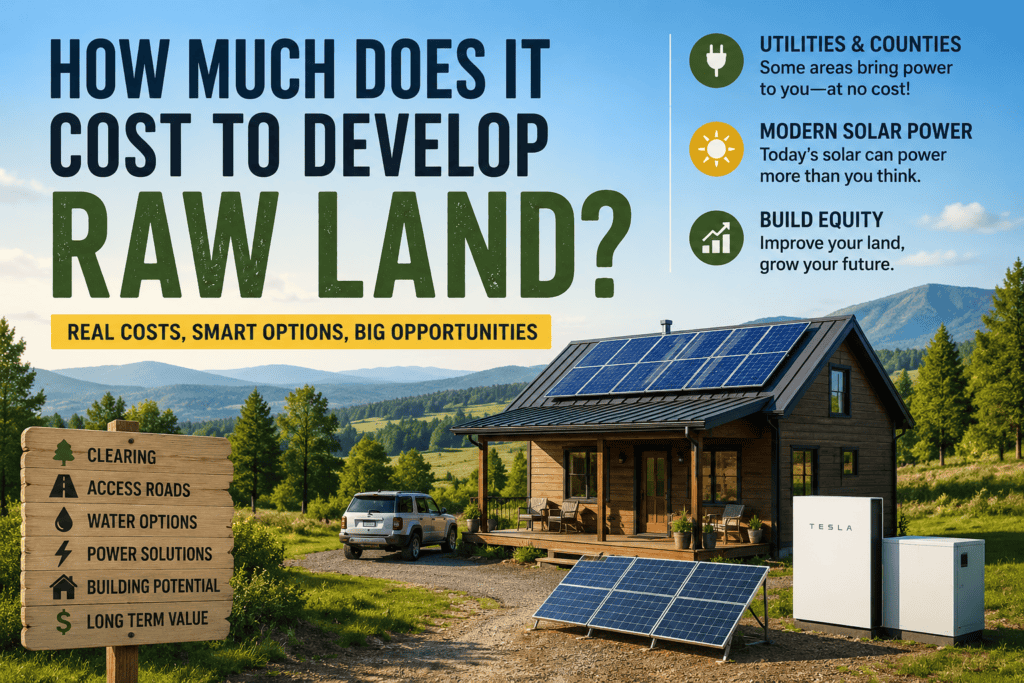
One of the biggest misconceptions about raw land is that development always costs a fortune. In reality, many landowners improve their property gradually over time, and modern technology has made rural living far easier and more affordable than it used to be. Some properties are already close to utilities, some counties actively encourage development, and many buyers today are choosing solar and off grid systems instead of relying entirely on traditional utility companies. For many people, developing land is less about “massive construction” and more about creating freedom, flexibility, and long term value. Developing Land Doesn’t Always Mean Building a House Immediately A lot of buyers purchase raw land with a long term plan. Some start with: You do not need to fully develop land all at once. Many landowners slowly improve their property over the years as their budget and plans evolve. Typical Land Improvement Costs Depending on the property, improvements may include: Improvement Typical Cost Range Land Survey $500 to $3,000 Driveway or Access Road $3,000 to $15,000 Septic System $5,000 to $20,000 Water Well $4,000 to $15,000 Basic Clearing $1,500 to $10,000 Power Connection Sometimes free to $30,000+ The important thing is that not every property needs every improvement. Some buyers intentionally seek: Which can dramatically reduce development costs. Some Counties and HOAs Help Bring Utilities In One thing many first time land buyers do not realize is that some counties, utility providers, and even HOAs actively encourage development. In growing rural areas, bringing power into a neighborhood benefits: Because of that, utility companies will sometimes extend power lines at little or no upfront cost to the property owner, especially if: This varies heavily by county and utility provider, but it is far more common than many buyers realize. Always ask: Sometimes the “future value” of the area is part of the equation. Off Grid Living Is Easier Than Ever Power today is not what it was 20 years ago. Modern solar technology has changed rural land development dramatically. Many landowners now choose: In some cases, solar can actually be cheaper than extending utility lines long distances. What Modern Solar Can Actually Power Today’s high end solar systems are capable of running far more than people expect. With properly designed systems and battery storage, many properties can power: The biggest factor is usually energy usage habits and battery capacity. Common Solar Setup Types Small Recreational Solar Setup Great for: Usually powers: Often portable and inexpensive. Mid Size Hybrid Solar System Common for: Can power: Often paired with generator backup. Full Home Solar + Battery Systems Modern systems from companies like Tesla and other solar manufacturers can support full time living when properly sized. Examples include: Tesla’s Powerwall systems, for example, are designed to store energy for nighttime use, outages, and off grid applications. Many modern off grid homes today operate very similarly to traditional homes. Land Development Is Often About Flexibility One reason people love raw land is flexibility. Unlike buying an expensive finished property, land owners can: Some buyers spend very little initially and simply enjoy the property recreationally while planning future improvements. The Biggest Money Saving Tip The best land deals are often properties that already have: Even small existing improvements can save thousands later. Final Thoughts Raw land development does not always need to be overwhelming or extremely expensive. Modern solar technology, expanding rural infrastructure, and flexible development options have made land ownership far more accessible than many people realize. Some buyers fully develop property immediately. Others improve land gradually over time while enjoying the freedom and long term value that land ownership can provide. The key is finding property that matches your goals, budget, and vision for the future.